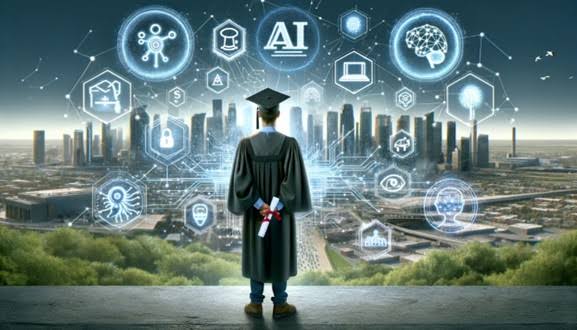
Should Students Be Allowed to Use AI? Ghana’s Education Sector Faces a New Debate
Artificial intelligence has become part of everyday learning, but Ghanaian education stakeholders are now asking a major question: Should students be allowed to use AI freely, or should there be clear rules governing its use?
The debate has intensified as AI tools become increasingly popular among students who use them for research, explanations, brainstorming and other academic activities.
At the Second National Research Conference on Teacher Education in Kumasi on August 27, 2026, stakeholders highlighted the need for a clear policy to guide the use of artificial intelligence in schools and colleges of education. The National President of the Principals of Colleges of Education (PRINCOF), Awinkene Atintono, said AI had become an important part of education but needed proper governance.
AI Is Already Changing How Students Learn
Rather than treating AI as something students can simply be prevented from using, many educators are beginning to focus on teaching students how to use it responsibly.
The University of Ghana, for example, has placed AI and digital skills at the centre of its student-training agenda. The university announced that AI-related certifications would be incorporated into a compulsory Level 100 course, including areas such as AI Essentials, Prompting Essentials and Digital Literacy.
This suggests that the conversation is gradually shifting from “Should students use AI?” to “How should students use AI?”
The Big Concern: Cheating
One of the biggest concerns surrounding AI in education is academic integrity.
If a student uses AI to generate an entire assignment and submits it as their own work, the technology may prevent teachers from accurately assessing what that student actually understands.
There are also concerns about students becoming too dependent on AI and failing to develop important skills such as critical thinking, writing, problem-solving and independent research.
The University of Ghana has already warned students against overreliance on AI, emphasizing the importance of maintaining their own academic skills.
But AI Can Also Be a Powerful Learning Tool
Used properly, AI can help students understand difficult topics, generate ideas, practise questions and receive explanations in simpler language.
Ghana is already moving towards greater use of AI in education. In May 2026, the government signed an agreement with Google for Education aimed at strengthening digital literacy and integrating advanced AI technologies into teaching and learning.
Ghana also launched its first National AI Strategy in April 2026, with responsible AI development and the development of local talent among its priorities.
So, Should AI Be Banned in Schools?
A complete ban could be difficult to enforce and may prevent students from developing skills they will need in the future.
Instead, Ghana’s education system may need clear guidelines explaining when AI is acceptable, when students must disclose its use, and when assignments should be completed entirely without AI assistance.
Teachers will also need training so they can guide students effectively.
The recent call by education stakeholders for a clear AI policy shows that Ghana’s education sector is entering an important new phase.
AI is not going away. The real challenge may be ensuring that students learn to use it as a tool for learning — rather than allowing the tool to do the learning for them.
What Do You Think?
Should students be allowed to use AI for assignments and research, or should schools place strict limits on its use?
Share your opinion in the comments.