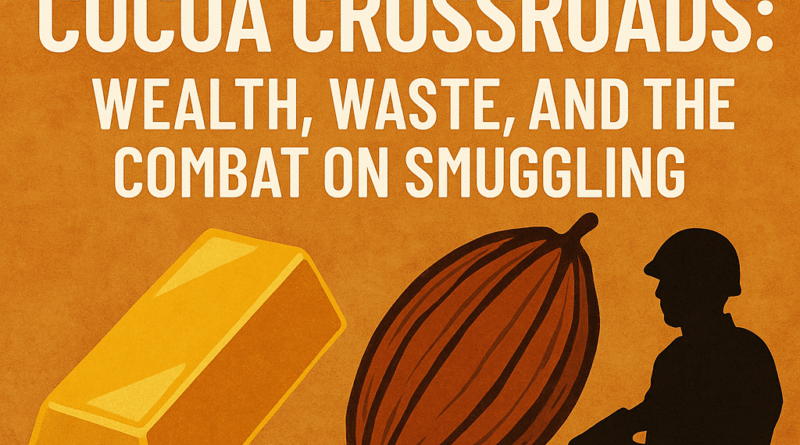
Ghana’s Gold & Cocoa Crossroads: Wealth, Waste, and the Combat on Smuggling
Ghana stands at a critical juncture. As Africa’s top gold producer and a global leader in cocoa, the nation’s natural resources have long powered its economy and culture. Yet today, these twin treasures are under threat—from smuggling, environmental destruction, and short-sighted exploitation.
In this blog post, we dive into how gold and cocoa—two powerful industries—are colliding, and what Ghana must do to preserve both its wealth and its future.
💰 Gold: Ghana’s Booming but Bleeding Sector
Ghana produces over 5.1 million ounces of gold annually, contributing about 40% of total export earnings. But while production is high, so are the losses.
A 2025 Swissaid report estimates Ghana lost $11.4 billion to gold smuggling over just ten years. Much of this gold is trafficked through informal routes into neighboring countries, then exported to global hubs like the UAE—entirely off the books.
To combat this, Parliament passed a new law in May 2025 banning foreign nationals from trading or buying artisanal gold, aiming to reduce foreign control and money laundering in the small-scale mining sector.
But is this enough? Without digital traceability systems and cross-border cooperation, enforcement may fall short.
🍫 Cocoa: The Crisis Behind the Beans
Ghana and Côte d’Ivoire supply nearly 60% of the world’s cocoa, but local yields are in freefall. The reasons are complex:
-
Climate change: El Niño and irregular rainfall have dried up once-fertile lands.
-
Disease: The swollen shoot virus is devastating farms in the Western and Ashanti regions.
-
Illegal mining (galamsey): Farmlands are being converted into informal gold sites, contaminating soil and water with mercury and cyanide.
As cocoa incomes become unreliable, many young people are leaving farms to mine gold—creating a self-reinforcing loop of destruction.
⚖️ Gold vs Cocoa: A Land War in Disguise
This isn’t just an economic issue—it’s a land-use crisis.
-
Cocoa farms take years to mature but provide income for decades.
-
Illegal gold mining offers fast cash but permanently damages the land.
-
Once land is mined, it becomes unusable for cocoa ever again.
As cocoa farmers sell land or give up hope, Ghana risks losing more than an industry—it risks its cultural legacy and food sovereignty.
🛠️ Solutions: Can Ghana Win This Battle?
To navigate this critical moment, Ghana must act across several fronts:
✅ Digitize the gold trade: Track every gram from mine to export with tech solutions.
✅ Rehabilitate mined lands: Create green mining zones and incentivize reclamation.
✅ Support cocoa farmers: Offer direct subsidies, weather insurance, and better market access.
✅ Crack down on smuggling: Collaborate with Togo, Burkina Faso, and UAE to stop illicit gold flow.
✍️ Final Thoughts
Ghana is blessed with natural riches—but the real wealth lies in how we manage them. Gold may shine bright, but cocoa sustains generations. If we can balance these industries with smart policy, fair trade, and environmental care, Ghana’s future will be just as rich as its soil.
Let’s not allow fast profits to erase slow, sustainable progress.